Table of contents
After years of “bleisure” and algorithm-driven itineraries, a quieter travel trend is asserting itself: travelers are chasing authenticity, and they increasingly measure it in walls, floorboards, and faded stone. Historic lodgings, once treated as niche indulgences, are gaining traction as a way to sleep inside a destination rather than beside it. From heritage inns in market towns to centuries-old manors near battlefields, these places are drawing guests who want texture, locality, and a story that outlives the stay.
Why “real” travel now starts at check-in
Forget the lobby scent and the identical corridor carpets, the new status symbol is specificity. Travelers are signaling that they know where they are, and the lodging has become the most visible proof. Industry surveys have been charting the broader appetite for experiences over possessions for years, and in 2025 it keeps showing up in the way people book: not only by price and ratings, but by narrative. A 2024 Expedia report on travel trends noted that experience-led planning remains central for many consumers, and Booking.com’s 2024 research likewise emphasized a sustained pull toward more “authentic” and culturally rooted trips. Those are broad strokes, but the implication is concrete: accommodation is no longer just a bed, it is part of the itinerary.
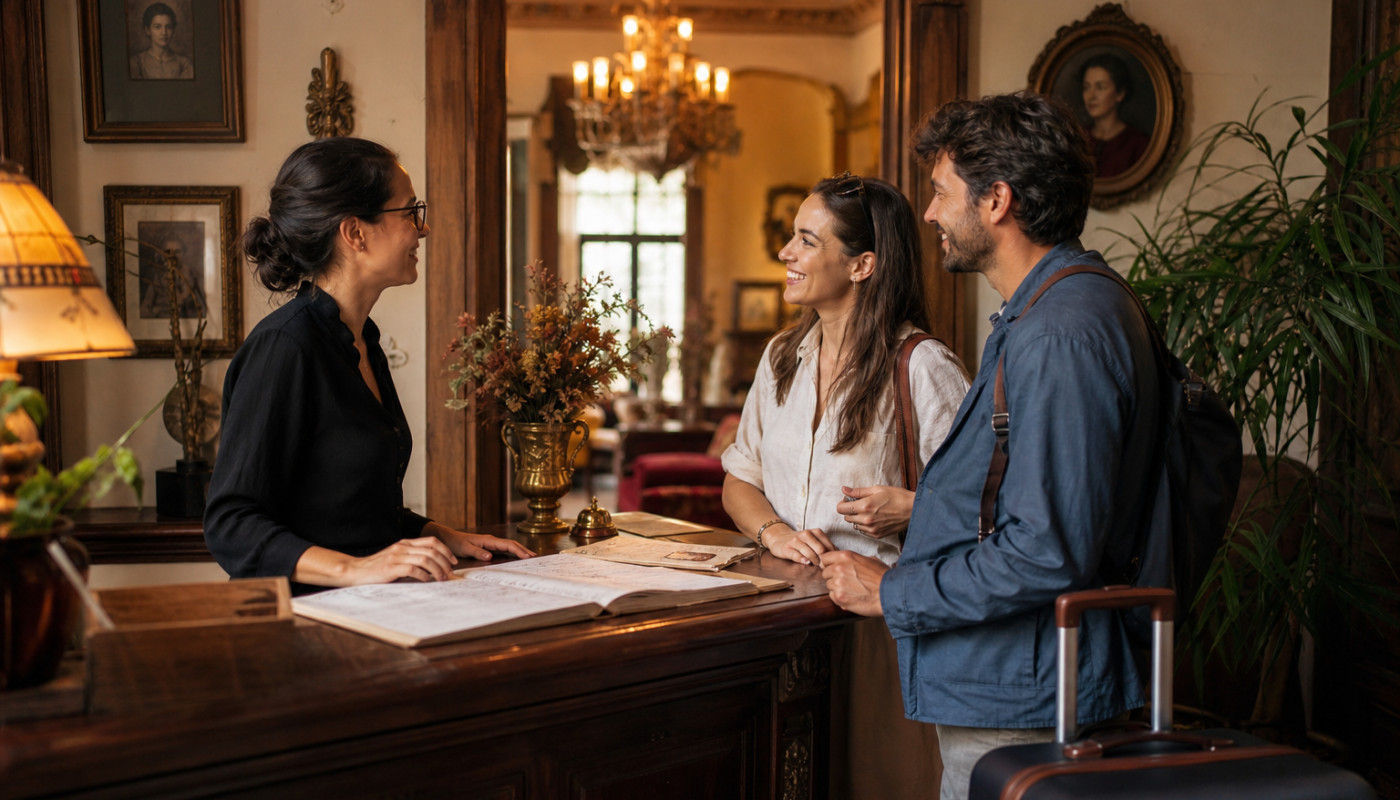
Historic lodgings meet that demand almost by definition, because they compress context into daily life. A timber-framed inn is not a museum behind glass; it is breakfast under old beams, uneven stairs you remember by feel, and staff who know the building’s quirks the way locals know the weather. That friction, the sense that a place has edges, is precisely what some travelers miss in a standardised hospitality world. Add the social-media loop and the appeal deepens, as distinctive spaces perform better than generic backdrops, yet the motivation is not only “shareable” aesthetics. In an era of remote work and flexible schedules, lengthening stays has become more common in certain segments, and the place you sleep has to carry meaning for longer than a weekend.
The economics help explain why the shift is sticking. Across many markets, higher operating costs have pushed mid-range hotels to standardize further, not less; meanwhile, heritage properties compete by leaning into what cannot be copied: provenance. The result is a subtle rebalancing, where travelers who once reserved historic rooms for anniversaries are now using them as the anchor for everyday trips, especially when a region’s story is the reason for going in the first place. You do not merely visit a landscape; you live inside it for a night, and that changes what you notice the next morning.
Sleep where history actually happened
Ask travelers what they remember a year later and they rarely start with thread count. They recall the creak of a corridor, the view that made sense of a painting they once saw, or the pub conversation that turned into an impromptu local lesson. Historic lodgings excel at creating those moments because they sit closer to the original sources of place: old roads, parish churches, market squares, and the routes armies and traders once took. They are often embedded in the geography that shaped events, so the stay itself becomes a form of interpretation, less academic than a guidebook but more immersive than a quick stop.
This is particularly evident in regions where heritage tourism is not an add-on but the core product. Think of countryside areas whose identity is built on layered narratives: medieval boundaries, early modern estates, and the remnants of industrial transitions. Visitors come seeking continuity, not just scenery, and they want their accommodation to speak the same language as the landscape. That is why themed itineraries tied to specific historical periods have grown in appeal, from Roman frontiers to WWII routes, and why lodgings that can credibly connect a guest to that time feel unusually powerful.
Nowhere is that more intuitive than in places where a single date still structures collective memory, and where visitors arrive with a story already in mind. In southern England, for example, the Norman Conquest remains a global reference point, and the countryside around the 1066 Battle of Hastings offers an unusually concentrated mix of sites, footpaths, ruins, and small towns that still wear their history lightly. For travelers who want a practical starting point, read this post here, it maps out the area and makes it easier to connect the dots between villages, landmarks, and what is realistically doable in a short break.
The draw is not only the famous battlefield, it is the way the surrounding settlements still function as living communities, with local events, independent shops, and pubs that did not appear because tourism demanded them. Staying in a historic inn nearby can turn a day trip into something closer to a lived experience, because the evening and early morning, the quietest parts of the day, are when places feel least staged. That is when you understand why roads run where they do, why a church sits on that rise, why a market town grew around one particular crossing.
Heritage stays, modern expectations: a tricky balance
Romance is part of the sell, but no one wants discomfort disguised as charm. The best historic lodgings have learned to manage a tightrope: preserving character while meeting contemporary standards for sleep, heat, and connectivity. Guests may forgive a low beam, but they will not forgive a freezing room or a bathroom that feels like an afterthought. That tension has become one of the most consequential questions in heritage hospitality, because the audience has broadened, and the tolerance for inconvenience has narrowed.
Operators are responding with targeted upgrades rather than wholesale renovation. Insulation is added discreetly, lighting is improved without bleaching the atmosphere, and bathrooms are modernized in ways that respect the building’s bones. The point is not to mimic a chain hotel; it is to remove the distractions that prevent the setting from doing its job. There is also a sustainability angle that plays well with today’s travelers: reusing existing buildings, extending their lifespan, and supporting local supply chains can reduce the footprint associated with new construction, even if the accounting varies case by case. Travelers increasingly ask where food comes from, whether a property supports local producers, and whether heritage is being maintained responsibly rather than mined for Instagram value.
Yet the “authenticity” promise can backfire if it becomes performative. Some properties over-script the past, filling rooms with random antiques and writing plaques that feel like a theme park. Others under-explain, assuming guests will intuit a building’s significance and leaving them with little more than a pretty staircase. The strongest places do something simple: they provide context when it is useful, and they let the building speak when it can. A short history in the room, a knowledgeable host, and recommendations that point outward into the community tend to land better than staged theatrics.
For travelers, the practical lesson is equally simple. Read recent reviews for comfort issues, check access constraints if mobility is a concern, and verify parking and late check-in policies, because older buildings and older streets rarely behave like modern developments. Authenticity is a joy, but it is best enjoyed when logistics are not fighting you all weekend.
How to book without being disappointed
Want the “historic” experience without the classic pitfalls? It starts with clarity about what you’re actually buying. Some lodgings are genuinely old buildings, others are modern properties with heritage styling, and the gap matters if your goal is immersion. Look for specifics: construction date where known, protected status, documented links to local history, and descriptions that name the setting rather than just praising “character.” When photos focus on details like original beams, stonework, fireplaces, and the surrounding streetscape, that is often a better signal than an over-edited wide-angle shot.
Then match the stay to your itinerary. Historic properties are often best used as hubs, not as add-ons, because their value increases when you have time to inhabit them. A single night can work, but two nights changes the rhythm, you arrive before dark, you walk after dinner, and you wake early enough to see the place before day-trippers appear. If your trip is about heritage sites, check distances and opening times, because many smaller attractions have limited schedules outside peak season. Call or message the property with one precise question, such as the quietest room locations or the reality of Wi-Fi in older wings; the quality of the answer is a surprisingly good proxy for how your stay will feel.
Price expectations also benefit from realism. Historic lodgings can be more expensive per room because maintenance is higher and scale is smaller, yet deals exist in shoulder seasons, midweek stays, and less obvious locations a short drive from headline attractions. In the UK context, travelers should also keep an eye on rail engineering works, local festivals, and school holidays, all of which can shift pricing quickly. The best value is often a package that includes breakfast and parking, particularly in rural areas where alternatives are limited and where the morning meal is part of the experience.
Finally, consider what you want to bring home. If it is knowledge, choose a place that connects you to guides, walking routes, or local museums; if it is rest, choose one with strong soundproofing and clear house rules. Historic lodging is not a monolith, it is a spectrum, and disappointment usually comes from booking “vibes” rather than selecting a property that matches how you actually travel.
Planning notes before you go
Book early for peak weekends, and budget for higher maintenance-driven room rates, especially in small heritage properties with limited inventory. If you’re relying on public transport, confirm late arrivals and taxi availability in advance. Check local council or tourism sites for seasonal offers and, where applicable, heritage-entry discounts, because combining lodging with site tickets can materially reduce the total cost.
Similar

How Effective Collaboration Enhances Regional Connectivity Projects?

Tips For Choosing The Best Welcome Bonuses In Online Gaming

Improving Player Retention Strategies In Online Casinos

Exploring The Drawbacks Of Playing At Non-Local Casinos

Exploring The Appeal Of International Gaming Sites For UK Players
Understanding The Risk Versus Reward In Quick Cash-out Games

Exploring The Benefits Of Online Lottery: How It Changes Lives

The Psychological Benefits Of Viewing Gambling As Entertainment

Exploring The Latest Trends In Sustainable Fashion And Lifestyle

Exploring The Thrills Of Road Crossing Games With High Stakes

Effective Budget Management Strategies For Casino Games

Frequently Asked Questions About The Newest Casino Gaming Sensation

Step-by-Step Process To Participate In Virtual Chicken Games

Exploring The Popularity Of Online Casino Games In Turkey

Key Objectives Of Popular Online Arcade Games

How Advanced Virtual Reality Is Transforming Interactive Gaming And Betting Platforms

Exploring The Advantages And Drawbacks Of Online Casino Apps

Exploring Innovative Approaches To Modern Online Gaming Experiences

Exploring The Thrill Of New Casino Minigames: Strategies And Tips

A Comprehensive Guide To Navigating Online Casino Security Features

Exploring The Benefits Of Specialized Search Platforms For Entertainment Options

Understanding Slot Machine Volatility And RTP For Better Gameplay

Essential Tips For First-time Travelers To Japan

Exploring The Popularity Of Trending Online Money Games

Exploring The World Of Anime-Themed Online Casinos: Games And Bonuses

What To Know About Bonuses And Promotions In Online Gambling

The Impact Of Australian Culture On Online Gambling Habits

How To Maximize Your Bonuses When Playing Online Slots

How To Spot Fair Play Certifications On Online Gaming Sites

Exploring The Rise Of Low Deposit Casinos In 2024

The Evolution Of Card Games: A Historical Perspective

Forecasting The Titans Of 2023: Predicting The Top Game Development Companies And Their Winning Strategies

The Evolution Of Card Games In Online Casinos

Understanding The Odds: Which Casino Games Offer The Best Chance Of Winning?

Exploring The Thrill Of Live Dealer Games In Online Casinos

Exploring The Popularity Surge Of Virtual Board Game Adaptations In Online Casinos

Maximizing Your Welcome Bonus: Essential Tips for Newcomers
